learn deep. ship safe.Follow ByteMunSubscribe

Vulnerabilities & CVEs

2 articles

A CVE (Common Vulnerabilities and Exposures) entry is a public ID for one specific security flaw, so vendors, scanners and security teams can all refer to the same bug. The ID tells you which flaw it is; the advisory behind it tells you what is affected, how serious it is and which versions fix it.

Category

Latest

2 articles

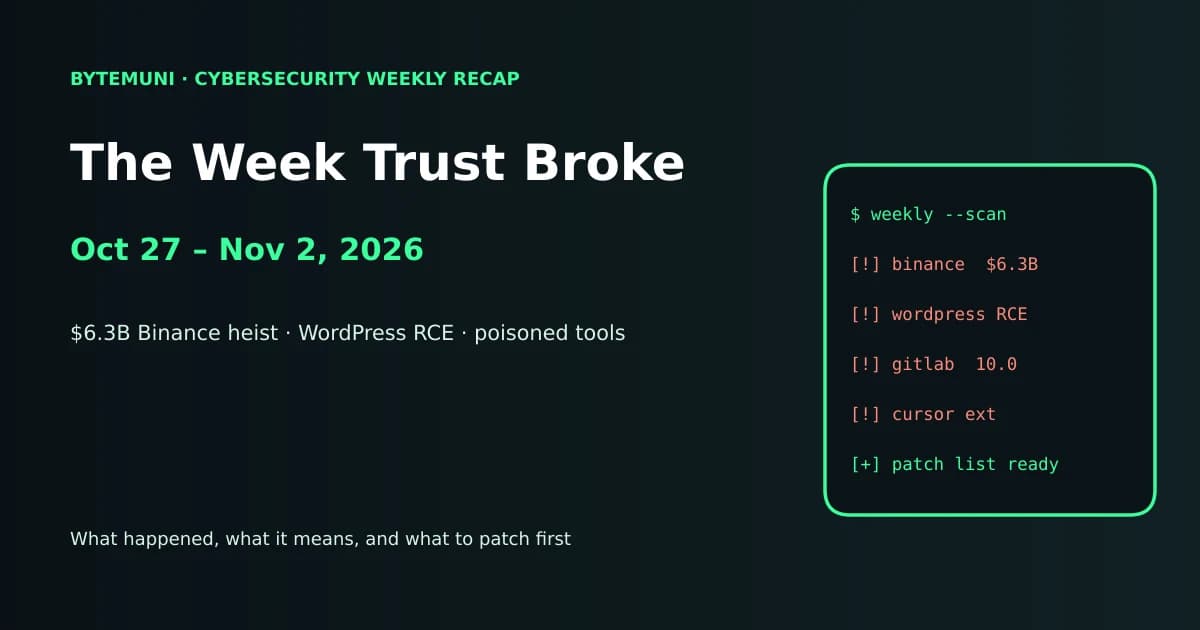
The Week Trust Broke: ByteMuni Cybersecurity Weekly Recap (Oct 27 – Nov 2, 2026)

This week, attackers came in through things people trust: a developer's laptop, a code extension, a monitoring script, AI model downloads, TV box firmware and even WordPress's update process. ByteMuni's weekly recap covers the $6.3 billion Binance heist, urgent patches for WordPress, GitLab and LXD, Volt Typhoon's hidden relay network, a banking malware campaign targeting Indian users, and a 10-step priority checklist.

13 min read

You've reached the end

Vulnerabilities & CVEs: where to start

When a new CVE lands, four questions matter more than the headline. Do you run the affected software and version? Is it reachable from the internet? Is it already being exploited? Is there a fixed release or a workaround? CISA's Known Exploited Vulnerabilities catalogue is a good signal for the third question. The CVSS score helps, but it knows nothing about your environment.

Upgrading the application isn't always the end of it. Container images, bundled libraries and servers nobody remembers can keep vulnerable code running after the fix, so check what is actually running, not just what your package file says.

Posts in this section explain vulnerabilities for developers and administrators: how the flaw works in plain language, who is affected, the fixed versions and how to check your own systems.