TypeScript in Rust: What the tsrs Port Means for Developers
Tsrs offers a Rust-based enhancement of TypeScript, bringing speed and memory improvements.

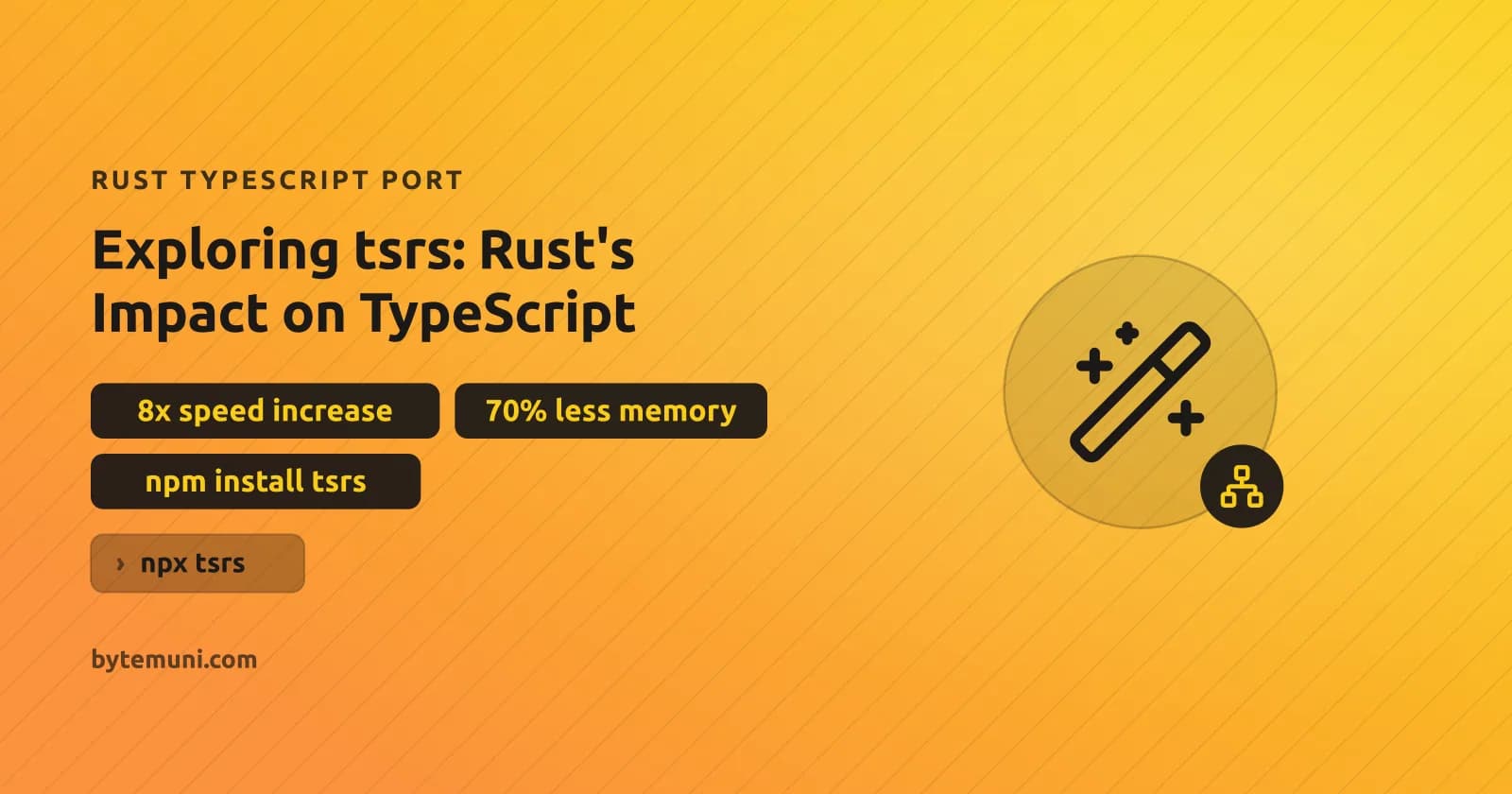
Cloudflare, in collaboration with VoidZero and Max Schwenk from Owner.com, has introduced tsrs, a Rust port of the TypeScript compiler. Developed in close collaboration with the TypeScript team, tsrs is part of the Oxc JavaScript compiler toolchain. Its primary goal is to provide developers with a faster, more memory-efficient experience, potentially changing how TypeScript environments operate.
Why the tsrs Rust Port Matters
TypeScript's performance improvements can significantly enhance developer productivity by reducing the time spent waiting on code checks. This Rust port offers up to 8x speed increases and uses roughly 70% less memory compared to the conventional TypeScript 7.0, under the same configuration. In practical terms, it means faster build processes and less resource consumption, freeing up computational power for other tasks.
Moreover, the move to Rust comes with additional benefits. Rust's WebAssembly (Wasm) compatibility ensures efficient memory interactions, an advantage over Go, TypeScript's previous porting language. This is especially beneficial for environments like Cloudflare Workers, which leverage Wasm for efficient performance, allowing full development ecosystems to run in constrained environments.
The integration with Wasm also extends the scope of TypeScript applications, facilitating client-side execution in browsers, on IoT devices, or other embedded systems. The advantages are evident when considering the absence of a garbage collector in Rust, which allows for more predictable and efficient use of memory resources.
Am I Affected?
If you're currently running TypeScript anywhere in your development pipeline, tsrs could provide tangible benefits. The enhanced performance and reduced memory usage can improve app development and execution times, especially if you frequently deal with large codebases. For teams running build systems and CI/CD on platforms like Cloudflare, integrating tsrs might optimize your resource utilization.
Organizations focused on offering high-performance and cost-efficient solutions would find a compelling case in adopting tsrs, particularly when deploying in environments requiring swift execution and lean memory usage.
Trying Out tsrs
To begin experimenting with tsrs, you can install it from npm:
npm install tsrs
npx tsrs
This experimental release offers a glimpse into how tsrs could transform your development workflow. My advice is to assess its impact by testing it against your current TypeScript setups, focusing on improvements in compilation time and memory footprint. Pay attention to how it scales with larger projects that demand more complex type checks.
Why Rust and Not Go?
While TypeScript's Go port already offered a notable increase in speed and efficiency, Rust brings the added advantage of more efficient memory management critical for WebAssembly contexts. Rust's lack of a garbage collector means cleaner memory management between guest and host, a perk when executing in environments like browsers or embedded devices. This choice aligns with the evolving need for high-efficiency code execution in diverse environments.
Maintaining Compatibility with TypeScript
The team behind tsrs is dedicated to maintaining alignment with TypeScript's core design and evolution. This involves merging related packages such as tsc-rs and tsrs for comprehensive TypeScript feature support, including Language Server Protocol (LSP) capabilities. By employing strategies used successfully with other Cloudflare projects like Vinext, differences in behavior between tsrs and upstream TypeScript are minimized.
One key element of this strategy is running nightly tests and creating tracking issues for any divergences. This process ensures a high degree of fidelity with the original TypeScript model, thereby fostering confidence among developers reliant on TypeScript’s stability.
Future Prospects with tsrs
As tsrs matures, Cloudflare plans to integrate it deeper into their stack, offering advanced tooling like type-aware lint rules in Oxlint. This could make full-featured toolchain experiences more portable and efficient, opening pathways for fully encapsulated development systems in places like browsers and IoT applications.
Additionally, tsrs's potential to optimize development setups might encourage more browsers to support advanced TypeScript features directly, leveraging Rust's speed and efficiency to enhance real-time compilation and execution capabilities.
I'd be keen on seeing how these developments influence TypeScript usage in cloud environments and client-side applications. As this tool evolves, it might become a standard in scenarios where speed, memory efficiency, and compatibility with Wasm are critical.
Limitations and Considerations
Despite the promising improvements, some differences remain between tsrs and core TypeScript, such as diagnostic output order. If your applications rely heavily on specific diagnostic behaviors, these discrepancies might necessitate additional attention during integration. Furthermore, as an experimental release, the stability of tsrs is yet to be proven in production-scale environments.
For now, my suggestion would be to implement tsrs in non-critical environments to evaluate its effectiveness while monitoring official TypeScript channels for updates on compatibility and feature parity.
Is Now the Right Time to Shift?
Considering the potential benefits, exploring tsrs in test environments would be prudent for teams aiming to improve efficiency. However, before committing fully, monitor the progress of its development and maintain a focus on maintaining compatibility with mainline TypeScript. The integration’s real value will be measurable as the port moves from experimental to stable release.
The transition to tsrs could be seen as part of a broader trend toward enhancing the efficiency and reach of TypeScript-based development, aligning with strategic goals of reducing latency and operational costs.
A Practical Example of tsrs Integration
Imagine a JavaScript developer working on a complex application requiring rigorous type checking. Using the conventional TypeScript compiler, they might experience slow compilation times as the complexity grows. By switching to tsrs, the developer might initially notice a reduction in build times by a factor of up to 8x, as reported in benchmarks, allowing faster iterations. This improvement would be especially beneficial during the final stages of development when type checks become more resource-intensive.
Frequently asked questions
What is tsrs?
Tsrs is a Rust port of the TypeScript compiler aiming for improved speed and memory efficiency.
How do I install tsrs?
You can install tsrs using npm: `npm install tsrs` and running it with `npx tsrs`.
Why use Rust for TypeScript?
Rust offers advantages like efficient memory management and compatibility with WebAssembly.
Are there any compatibility issues with TypeScript?
Some differences remain, such as diagnostic output order, but efforts are ongoing to minimize these.
Source: Introducing tsrs: A port of TypeScript to Rust
How this article was made: drafted with AI from the source above, then fact-checked against it before publishing.